

U.S. spot Bitcoin ETFs (exchange-traded funds) recorded $1.28 billion in net outflows last week, marking their largest weekly withdrawals since late June.
The heavy redemptions pushed year-to-date net outflows for the funds to approximately $919 million, according to data. This followed $515 million in net outflows during October, extending a period of sustained investor caution.
Bitcoin slipped below $76,000 during the week as markets absorbed several overlapping pressures, including the aftermath of Binance’s $6.3 billion security incident, uncertainty following the U.S. midterm elections, and a broader sell-off in technology stocks.
BlackRock’s IBIT Accounts for Nearly All Outflows
BlackRock’s iShares Bitcoin Trust (IBIT), the largest spot Bitcoin ETFs by assets under management, dominated the weekly flows. The fund saw $1.21 billion in net outflows, representing roughly 95% of the total reported data, according to data from Farside Investors.
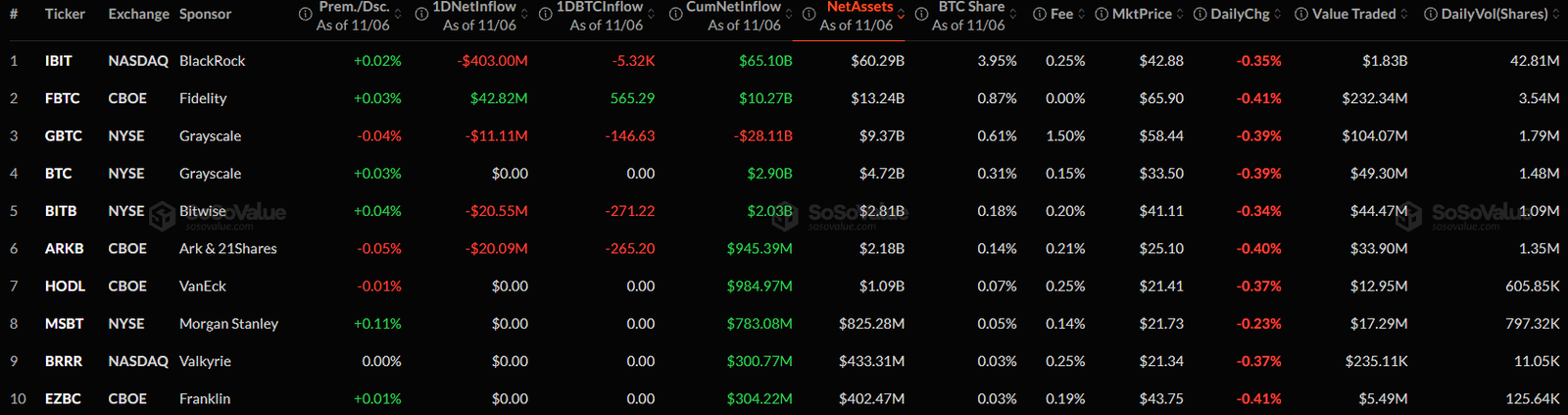
IBIT extended its outflow streak to six consecutive trading sessions. Since October 30, investors have withdrawn approximately $1.44 billion from the fund.
In contrast, Fidelity’s Wise Origin Bitcoin Fund (FBTC) posted about $93 million in net inflows for the week, even after experiencing nearly $200 million in outflows on Thursday alone.
Market Sentiment Turns Cautious
Research firm Bitfire attributed the weakness to a combination of shifting interest rate expectations, post-election uncertainty, and ongoing pressure in technology stocks. The firm also noted that investors are reassessing the likelihood of Congress passing the CLARITY Act before year-end.
Bitfire pointed to a Crypto Fear & Greed Index reading of 25, signaling extreme fear, and a negative Coinbase Premium, which indicated Bitcoin was trading at a discount on Coinbase relative to other venues.
The firm described current conditions as a “breakdown and bottom-seeking phase.” It highlighted the $74,400–$75,000 zone as a key support area and warned that a sustained break below this range could open the door to further downside. Upcoming U.S. inflation data and signals from the Federal Reserve were flagged as important near-term catalysts.
At the time of publication, Bitcoin was trading near $74,049, down roughly 5% over the prior seven days and 2.3% in the previous 24 hours.
How Sensitive Are Bitcoin ETF Flows?
The latest outflow data underscores the sensitivity of Bitcoin ETFs flows to both crypto-specific events and traditional market risk sentiment. After periods of strong inflows earlier in the year, the funds have faced consistent pressure in recent weeks as macroeconomic uncertainty and equity market volatility weighed on investor appetite for risk assets.
Market participants will be watching whether the current support levels hold and how institutional flows respond once clearer signals emerge from inflation data and Federal Reserve communications.

Editorial Process for bitcoinist is centered on delivering thoroughly researched, accurate, and unbiased content. We uphold strict sourcing standards, and each page undergoes diligent review by our team of top technology experts and seasoned editors. This process ensures the integrity, relevance, and value of our content for our readers.