

Crypto Regulation has become one of the biggest questions following the 2026 US midterm elections, particularly after cryptocurrency-backed political groups spent approximately $176 million trying to influence congressional races.
Despite that investment, the industry has encountered a changing political landscape, with Democrats gaining control of Congress and several high-profile crypto-backed campaigns falling short.
For an industry seeking clearer rules, the results raise an important question: Can cryptocurrency companies still secure the legislation they have spent years advocating?
We believe the answer depends less on party control alone and more on whether lawmakers can reach agreements on digital-asset oversight.
Why Did Crypto Spend $176 Million on Elections?
Source: Associated Press, October 5, 2026.
According to Reuters, cryptocurrency groups spent approximately $176 million across more than 100 congressional races during the 2026 election cycle.
The objective was to build support for digital-asset legislation among lawmakers from both parties.
Fairshake, one of the industry’s largest political action committees, led much of this effort.
Backed by major cryptocurrency companies and investors, including Coinbase, Ripple, and Andreessen Horowitz, the organization supported candidates who had demonstrated interest in crypto legislation.
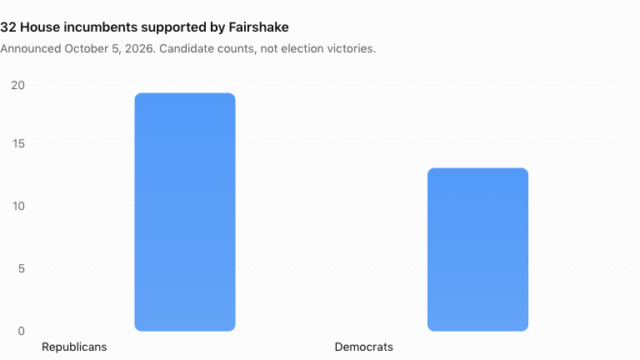
In October, Fairshake announced support for 32 incumbent House candidates, including 19 Republicans and 13 Democrats.
This bipartisan strategy reflected an important reality: cryptocurrency legislation often requires cooperation across party lines.
A $63 Million Campaign Faces a Major Setback
One of the most closely watched races took place in Ohio.
Crypto-aligned political groups spent approximately $63 million supporting Republican Jon Husted or opposing Democrat Sherrod Brown.
Brown previously chaired the Senate Banking Committee and has criticized aspects of the cryptocurrency industry’s regulatory agenda.
However, the election did not deliver the outcome these groups sought.
Brown’s return to the Senate represents a significant setback for one of the industry’s most expensive political campaigns.
The result also demonstrates that campaign spending does not guarantee electoral success.
For us, the larger lesson is that building lasting support for cryptocurrency innovation requires more than advertising expenditure.
It also requires engagement with lawmakers who hold different views on investor protection and financial regulation.
What Happens to the CLARITY Act?
We previously covered how Trump backed cryptocurrency market structure legislation, highlighting the administration’s efforts to establish clearer rules for the industry.
The Digital Asset Market Clarity Act, commonly known as the CLARITY Act, remains central to the debate.
The legislation seeks to establish clearer regulatory responsibilities for the Securities and Exchange Commission and Commodity Futures Trading Commission.
Supporters argue that businesses need predictable rules to operate and innovate in the United States.
Critics have raised concerns about investor protections, regulatory gaps, and potential conflicts of interest.
The bill already faced difficulties before election day.
In September, the Senate failed to advance the legislation in a procedural vote, demonstrating that Republican control had not been enough to resolve disagreements.
With congressional leadership changing, negotiations could take a different direction.
We believe a workable agreement remains possible, but it would require addressing concerns from both parties.
Does a Different Congress Mean Stricter Crypto Rules?
Not necessarily.
Although Democratic lawmakers have generally emphasized stronger oversight and consumer protections, some have also supported legislation designed to establish clearer rules for digital assets.
Likewise, Republican lawmakers have not agreed on every cryptocurrency proposal.
The election changes congressional leadership, committee priorities, and the legislative timetable. It does not automatically reverse existing laws or executive policies.
As we explored in our analysis of Bitcoin’s historical midterm election patterns, political developments can also influence cryptocurrency market sentiment.
The GENIUS Act, which established a federal framework for payment stablecoins in 2025, remains an important example of legislation that has already moved forward.
For Bitcoin and the broader cryptocurrency market, regulatory clarity remains valuable regardless of which party controls Congress.
What We’re Watching Next
The election may be over, but the industry’s political work is far from finished.
We are watching whether lawmakers restart CLARITY Act negotiations, how congressional committees approach digital-asset oversight, and whether industry groups maintain their bipartisan strategy.
We also believe investors should distinguish between short-term political uncertainty and the long-term development of cryptocurrency infrastructure.
Bitcoin’s network continues operating independently of Washington, while institutional participation and blockchain adoption remain important areas to monitor.
The industry’s $176 million election effort shows how important US regulation has become to cryptocurrency businesses.
But the next phase may be determined less by campaign spending and more by the compromises lawmakers are willing to make.

Editorial Process for bitcoinist is centered on delivering thoroughly researched, accurate, and unbiased content. We uphold strict sourcing standards, and each page undergoes diligent review by our team of top technology experts and seasoned editors. This process ensures the integrity, relevance, and value of our content for our readers.